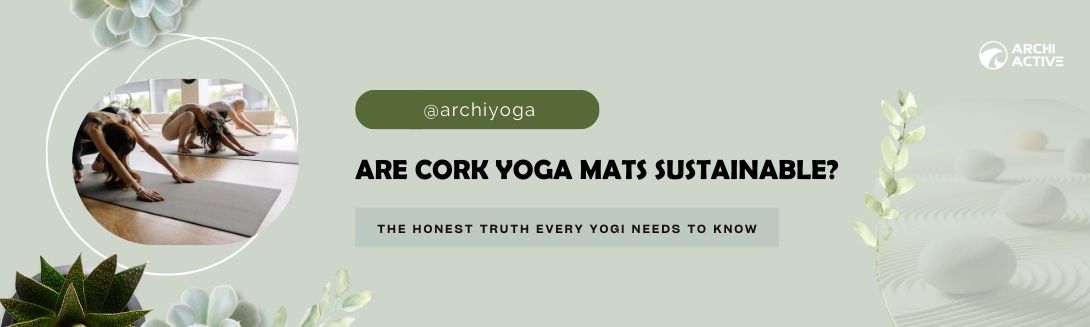
Sind Kork-Yogamatten nachhaltig? Die ungeschminkte Wahrheit, die jeder Yogi kennen sollte.
Das kennen wir alle. Man rollt die Matte aus, macht den ersten herabschauenden Hund und plötzlich rutschen die Hände ab. Oder noch schlimmer: Man beendet die Übungspraxis und fragt sich, ob die Dämpfe, die man von seiner „billigen, aber treuen“ Matte eingeatmet hat, wirklich das sind, worum es bei Ahimsa (Gewaltlosigkeit) geht.
Bei Archiyoga, Wir glauben, dass Ihre Matte Ihr persönlicher Rückzugsort ist. Doch in einer Welt voller Umweltversprechen und Öko-Siegel wird es immer schwieriger, echte Nachhaltigkeit von cleverem Marketing zu unterscheiden. Kork erlebt gerade einen regelrechten Boom in der Wellness-Szene, aber die Frage bleibt: Ist es tatsächlich nachhaltig oder nur eine weitere schöne Fassade, die unter Druck zusammenbricht?
Lasst uns die Wahrheit gemeinsam enthüllen.

Die Rinde ist der Star: Woher Kork eigentlich kommt
Um zu beurteilen, ob Kork nachhaltig ist, müssen wir seine Herkunft betrachten. Anders als die Bäume, die uns Kautschuk oder Holz liefern, wird die Korkeiche (*Quercus suber*) nicht gefällt, um unsere Matten herzustellen. Tatsächlich verliert sie alle neun Jahre ihre gesamte Oberfläche.
Das ist keine Metapher. Die Rinde wird von erfahrenen Handwerkern sorgfältig von Hand geerntet, vorwiegend in den mediterranen Wäldern Portugals, die etwa die Hälfte des weltweiten Korks produzieren. Dieser Schälprozess ist so schonend, dass der Baum regeneriert seine RindeSie kann über 200 Jahre alt werden. Während sie sich regeneriert, absorbiert sie bis zu fünfmal mehr CO₂ als ein nicht abgeholzter Baum.
Archi Yoga-Tipp: Wenn Sie sich für eine Matte aus nachhaltig geerntetem Kork entscheiden, zerstören Sie keinen Wald, sondern unterstützen ein uraltes, intaktes Ökosystem. Achten Sie auf Zertifizierungen wie FSC (Forest Stewardship Council), um sicherzustellen, dass die Herkunft des Korks geschützt ist.
Der Haken: Es kommt auf die inneren Werte an.
Hier wird die Sache mit dem „grünen“ Material etwas komplizierter. Zwar ist die Kork-Oberschicht ein Paradebeispiel für Nachhaltigkeit, doch eine Yogamatte besteht selten nur aus Kork. Um Dämpfung und Stabilität zu gewährleisten, sind die meisten Korkmatten – darunter auch einige unserer Modelle – mit einer Basisschicht, meist aus Naturkautschuk, verbunden.
Hier entscheidet sich, ob Nachhaltigkeit steht oder fällt.
Das Gute: Naturkautschuk ist ebenfalls ein nachwachsender Rohstoff, der aus Bäumen gewonnen wird. In Kombination mit ungiftigen, wasserbasierten Klebstoffen bleibt die Matte biologisch abbaubar und ist frei von den in PVC-Matten enthaltenen Petrochemikalien.
Das Schlechte: Manche Hersteller sparen an der Qualität. Sie verwenden synthetische Klebstoffe, Mischschäume oder beschichteten Kork, der die natürlichen Poren verschließt. Wenn die Matte mit herkömmlichen Klebstoffen zusammengehalten wird, ist sie nicht mehr vollständig natürlich. Es handelt sich um ein Verbundprodukt, das letztendlich auf der Mülldeponie landet.
Archi Yoga-Tipp: Echte Nachhaltigkeit erfordert Transparenz. Eine Matte ist nur so umweltfreundlich wie ihr schwächstes Bauteil – in der Regel der Klebstoff.
Das „bröckelnde“ Rätsel: Bedeutet kurze Lebensdauer = weniger Grün?
Dies ist die ehrlichste Frage, die uns aus unserer Archi-Yoga-Community gestellt wird: „Wenn meine Korkmatte nach sechs Monaten abblättert und sich ablöst, ist das nicht schädlicher für die Umwelt, als eine PVC-Matte fünf Jahre lang zu benutzen?“
Die kurze Antwort? Ja. Ein kurzlebiges „Öko“-Produkt ist in Wirklichkeit eine Umweltbelastung.
Kork ist von Natur aus langlebig. Da es sich jedoch um eine Naturfaser handelt, kann er sich abnutzen, insbesondere bei minderwertigen oder unsachgemäß behandelten Matten. Ist die Korkschicht zu dünn oder die Haftung mangelhaft, zerbröselt sie. Wird sie jedoch sorgfältig gefertigt – mit einer ausreichend dicken, fest mit einer hochdichten Naturkautschukbasis verbundenen Korkschicht –, kann eine Korkmatte viele Jahre halten. 3 bis 5 Jahre oder länger.
Profi-Tipp von Archiyoga: Um die Lebensdauer Ihrer Matte zu verlängern (und sie nachhaltig zu gestalten):
1. Rolle es, falte es nicht. Durch das Falten werden die Korkfasern beschädigt.
2. Vorsichtig reinigen. Eine einfache Mischung aus Wasser und Essig wirkt Wunder. Scharfe Chemikalien würden die natürlichen Materialien zerstören.
3. Kühl halten. Lassen Sie es nicht in einem heißen Auto liegen; die Hitze kann den Gummiboden verformen und den Kork austrocknen.
Das Leistungsparadoxon: Grip, der mit deinem Flow wächst
Nachhaltigkeit bedeutet nicht, auf Leistung zu verzichten. Im Gegenteil, genau hier überzeugt Kork selbst Skeptiker. Ob beim Hot Yoga oder bei anstrengenden Workouts, bei denen der Schweiß auf die Matte tropft – Kork ist einfach magisch.
Im Gegensatz zu Gummi, der bei Nässe rutschig werden kann, ist Kork leicht hydrophil. Er absorbiert Feuchtigkeit und wird dadurch mit zunehmendem Schwitzen griffiger. Studien haben gezeigt, dass die Reibung von Korkoberflächen im feuchten Zustand um bis zu 34 % steigen kann.
Es ist zudem von Natur aus antimikrobiell und geruchsabweisend, sodass nicht der unangenehme Geruch nach „alter Matte“ entsteht, der synthetische Varianten so oft plagt.
Das Urteil: So erkennen Sie eine wirklich nachhaltige Korkmatte
Sind Yogamatten aus Kork also nachhaltig? Ja, das können sie sein – wenn man sie mit Bedacht auswählt.
Bei Archi Yoga setzen wir uns für bewussten Konsum ein. Kaufen Sie nicht einfach nur „Kork“, sondern den *richtigen* Kork. Hier ist eine Checkliste, die Ihnen bei der Suche hilft:
1. Überprüfen Sie die Basis: Achten Sie darauf, dass die Rückseite aus Naturkautschuk und nicht aus synthetischem Schaumstoff besteht. Naturkautschuk ist langlebig und biologisch abbaubar.
2. Fordern Sie Transparenz: Die Marke sollte Auskunft darüber geben, woher der Korken stammt (Portugal/Mittelmeerraum ist der Goldstandard).
3. Spüre den Abschluss: Vermeiden Sie Matten, die sich plastikartig oder versiegelt anfühlen. Kork sollte sich auch wie Kork anfühlen. Eine Versiegelung beeinträchtigt die durch Schweiß aktivierte Griffigkeit.
4. Langlebigkeit berücksichtigen: Eine etwas dickere Matte (4-5 mm) bietet oft eine höhere Strapazierfähigkeit für das tägliche Üben als eine superdünne Reiseversion.
Abschließender Gedanke: Mehr als nur eine Matte
In der Yoga-Philosophie leiten Santosha (Zufriedenheit) und Ahimsa (Gewaltlosigkeit) unser Handeln. Die Wahl einer nachhaltigen Korkmatte ist eine Fortsetzung dieser Praxis. Sie ist ein Ausdruck des Respekts vor der Erde, die uns trägt, der Wertschätzung von Qualität gegenüber kurzfristigen Lösungen und der Wertschätzung der natürlichen Schönheit eines Materials, das mit Würde altert.
At ArchiyogaWir stellen unsere Kollektion so zusammen, dass Sie beim Betreten Ihrer Matte auf einem Fundament der Integrität stehen.
Bereit, den Unterschied zu erleben? Entdecken Sie unser Sortiment an [FSC-zertifizierten Kork-Yogamatten] und finden Sie die perfekte Grundlage für sich.
Haben Sie gute (oder schlechte) Erfahrungen mit Korkmatten gemacht? Teilen Sie Ihre Geschichte in den Kommentaren unten – Ihre Erkenntnisse helfen unserer gesamten Community, achtsamer zu üben.


 English
 Français
 Deutsch



 IPv6 NETZWERKUNTERSTÜTZT